What happens when patients receive different levels of medical care based on their race—and what can hospitals do to change it?
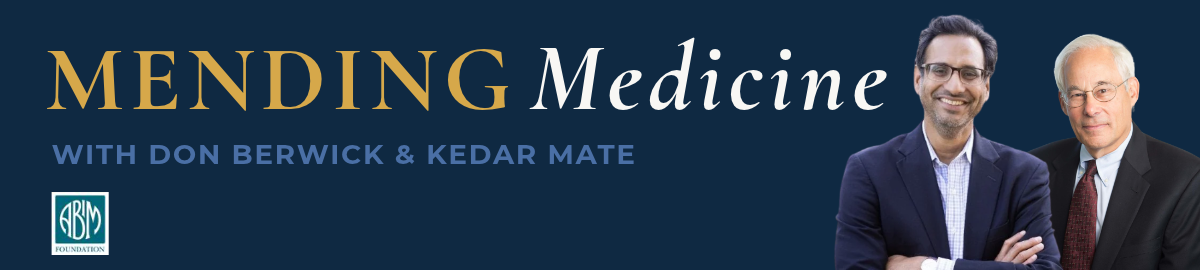
In this episode of Mending Medicine, hosts Dr. Donald Berwick and Dr. Kedar Mate sit down with Dr. Michelle Morse, physician, health equity advocate, and former New York City Health Commissioner, to examine how racial disparities in healthcare emerge, why institutional racism can persist within medical systems, and what it takes to create meaningful change.
Drawing on her work at Brigham and Women’s Hospital, Dr. Morse shares the story behind a groundbreaking investigation into racial inequities in cardiac care. An analysis spanning 10 years and approximately 3,000 patients revealed that Black and Hispanic patients experiencing heart failure were less likely than white patients to receive referrals to specialty cardiology services.
These disparities mattered. Patients receiving specialty cardiology care had access to additional clinical expertise and discharge support that could help them manage heart failure after leaving the hospital.
But identifying the problem was only the beginning.
Dr. Morse explains how her team worked to translate research into action, including developing a clinical decision support tool within the electronic health record to prompt clinicians to reconsider referral decisions for patients from historically excluded groups.
She also reflects on the institutional resistance, public backlash, and personal challenges that accompanied the effort to confront inequity in medical care.
In this episode, you’ll learn:
- What a decade of research revealed about racial disparities in heart failure treatment and specialty cardiology referrals.
- How institutional racism can influence healthcare delivery and clinical decision-making.
- Why access to specialized cardiac care and discharge resources matters for patient outcomes.
- How electronic health record alerts and clinical decision support tools can help address inequities.
- What it takes to turn health equity research into measurable, system-level interventions.
- Why collaboration, institutional accountability, and leadership are essential to lasting healthcare reform.
From her early experiences in global health to her work challenging inequities within a major academic medical center, Dr. Morse offers a powerful perspective on the importance of asking difficult questions—and acting on the answers.
How can healthcare organizations move beyond acknowledging disparities to redesigning the systems that create them?
Join Dr. Berwick, Dr. Mate, and Dr. Morse for a candid conversation about racial equity in medicine, institutional accountability, and the courage required to transform healthcare.
About Mending Medicine
Presented by the ABIM Foundation, Mending Medicine explores how meaningful change happens across healthcare systems. Hosted by Dr. Donald Berwick and Dr. Kedar Mate, the podcast brings together leading thinkers, practitioners, and changemakers to examine the ideas, decisions, and collaborations reshaping healthcare.
Theme music is by Madosini, performed by The Boundary Objects.
Podcast: Play in new window | Download